
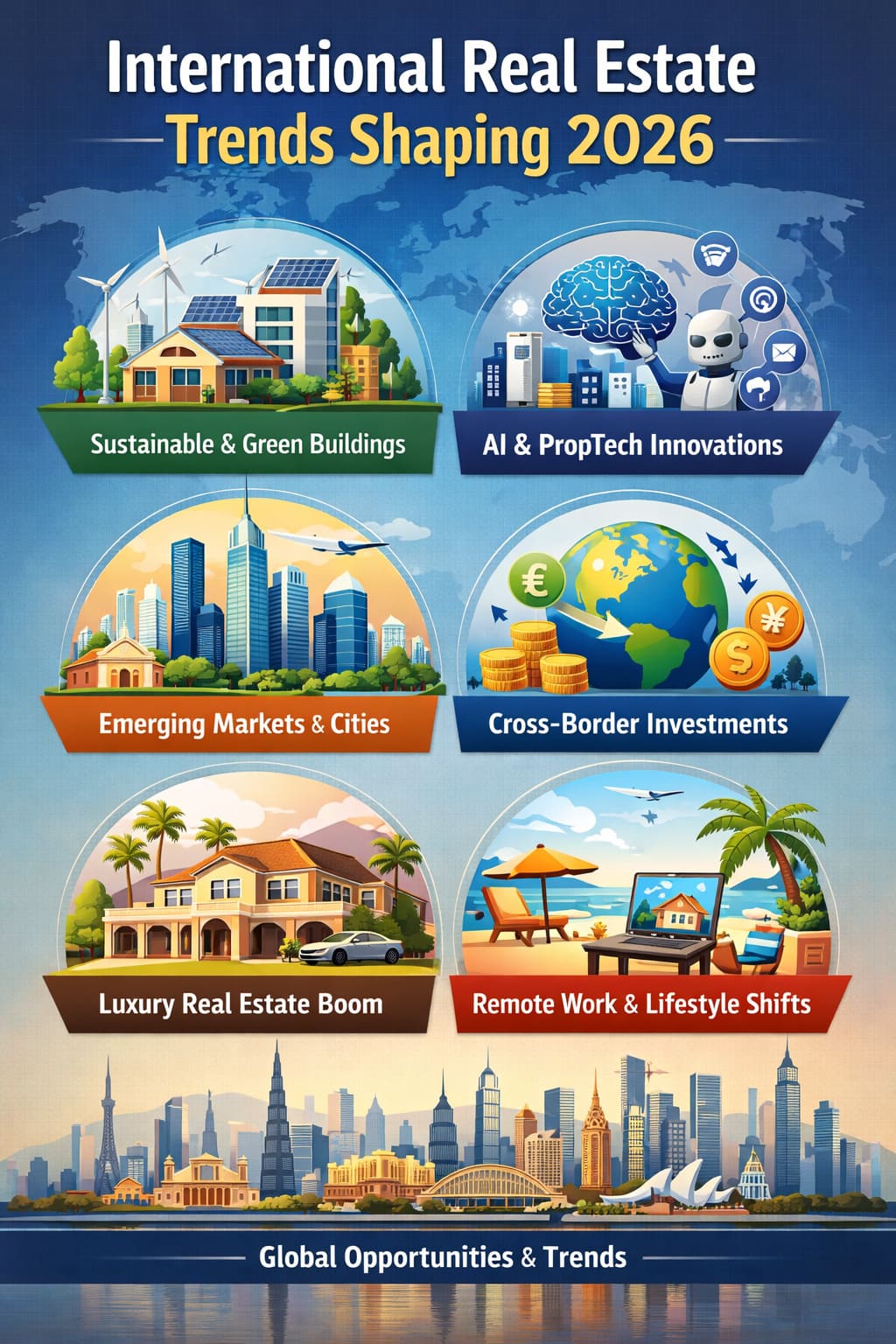
The international real estate market is entering 2026 with renewed momentum, driven by shifting economic conditions, evolving investor priorities, and increased cross-border activity. After a period of volatility influenced by inflation, interest rate adjustments, and geopolitical uncertainty, global property markets are showing signs of stabilization.
Investors are adapting to a new environment where strategic positioning, asset quality, and long-term resilience matter more than short-term speculation.
One of the most notable trends is the steady recovery of prime residential markets in major global cities. Locations such as Dubai, London, Singapore, and Miami continue to attract high-net-worth individuals seeking capital preservation, lifestyle advantages, and tax-efficient jurisdictions. Dubai, in particular, remains a standout performer, with sustained demand from international buyers and investors benefiting from regulatory transparency and investor-friendly policies.
Commercial real estate is also evolving. While traditional office spaces faced challenges during the post-pandemic years, prime-grade assets in central business districts are regaining interest, particularly those offering modern infrastructure, sustainability certifications, and flexible layouts.
Investors are now prioritizing ESG-compliant buildings and energy-efficient developments, recognizing that sustainability has become both a regulatory requirement and a competitive advantage.
Meanwhile, logistics and industrial assets remain strong performers globally. The continued growth of e-commerce, supply chain diversification, and regional manufacturing strategies have increased demand for warehouses, fulfillment centers, and last-mile distribution hubs. Institutional investors are actively reallocating capital toward these asset classes, viewing them as more resilient in fluctuating economic cycles.
Emerging markets are also gaining attention. Countries in Southeast Asia, parts of Eastern Europe, and selected African regions are witnessing infrastructure investments and urbanization projects that create new real estate opportunities.
Strategic investors are entering these markets cautiously, focusing on partnerships, due diligence, and long-term growth potential. Interest rate policies remain a key factor influencing global property transactions.
While central banks have begun easing monetary tightening in certain regions, financing conditions still require careful structuring. Developers and investors are increasingly relying on joint ventures, private equity, and structured financing solutions to maintain project viability.
Another important shift is the rise of digital transformation in real estate. PropTech solutions, virtual viewings, blockchain-based transactions, and AI-driven valuation tools are streamlining operations and enhancing transparency. International investors now expect data-driven insights, real-time reporting, and efficient transaction processes as standard practice.
Despite ongoing global uncertainties, real estate continues to be viewed as a strategic asset class for diversification and long-term value creation. Demand for secure, income-generating properties remains strong, particularly in politically stable jurisdictions with clear regulatory frameworks.
As 2026 progresses, the international real estate landscape will likely be defined by adaptability, sustainability, and cross-border capital flows. Investors who combine market intelligence with disciplined risk management will be best positioned to capitalize on emerging opportunities while navigating an increasingly interconnected global market.